Combo Soccer Goal + Basketball Hoop
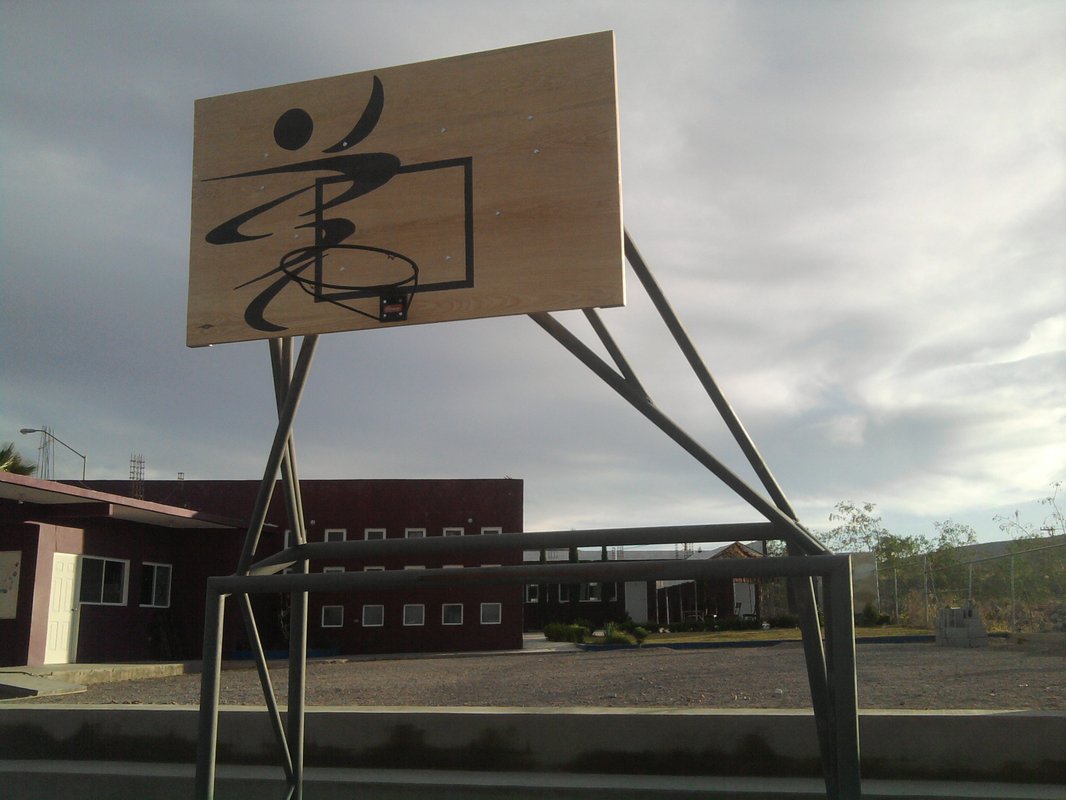
Combo Soccer Goal + Basketball Hoop
High schools needed durable, space-efficient sports equipment supporting multiple activities in limited areas.
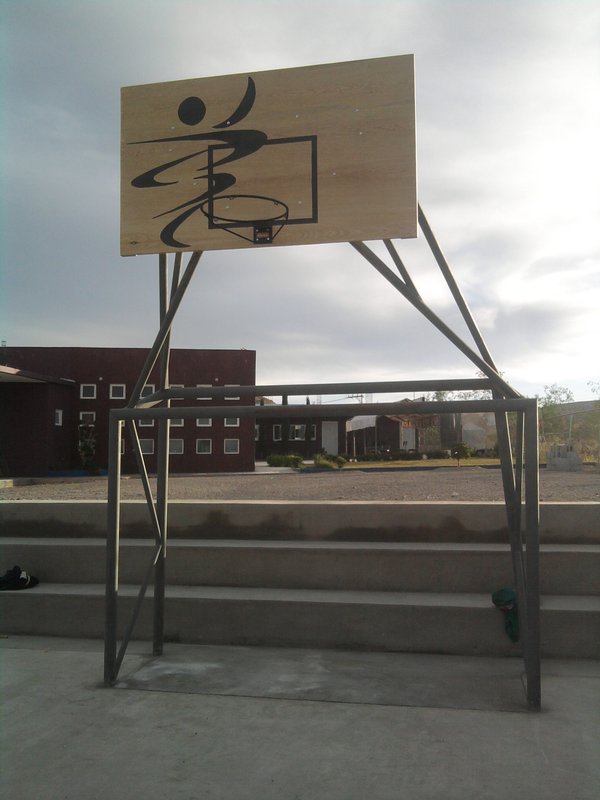
Designed and manufactured a multifunctional metal/wood sports goal combining soccer and basketball features for outdoor school use.
Requirements
Research user needs; develop concepts; engineer structure for safety/durability; provide manufacturing drawings; oversee welding, painting, assembly, and installation.
Outcomes
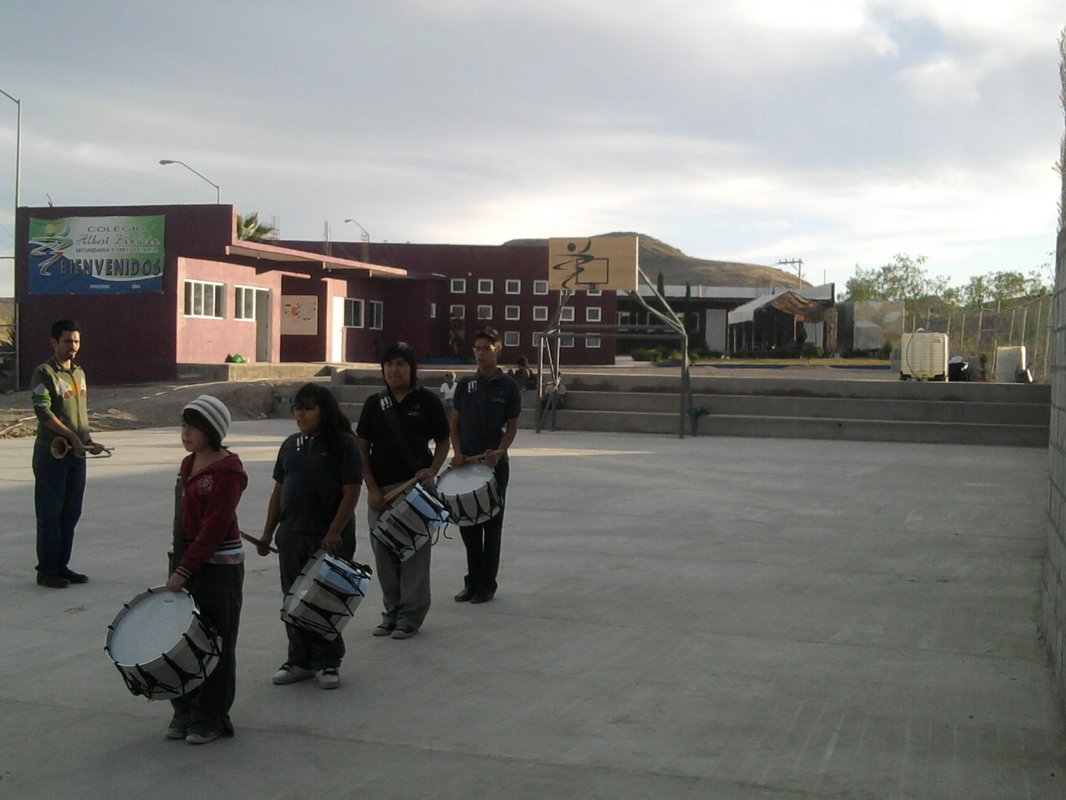
Led full process from concept to on-site installation; delivered robust combo unit; provided plans and hands-on guidance to metalshop; successfully deployed at school for student use.
Skills
Tools
Tags
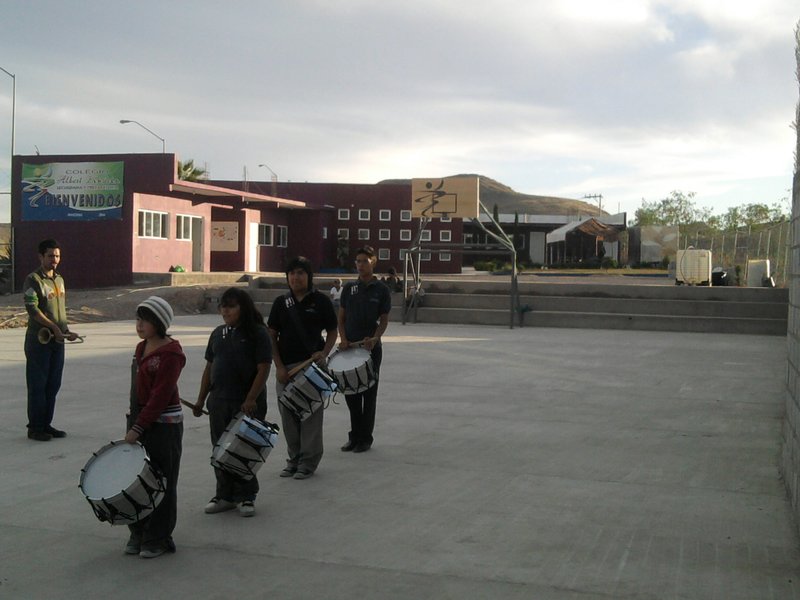
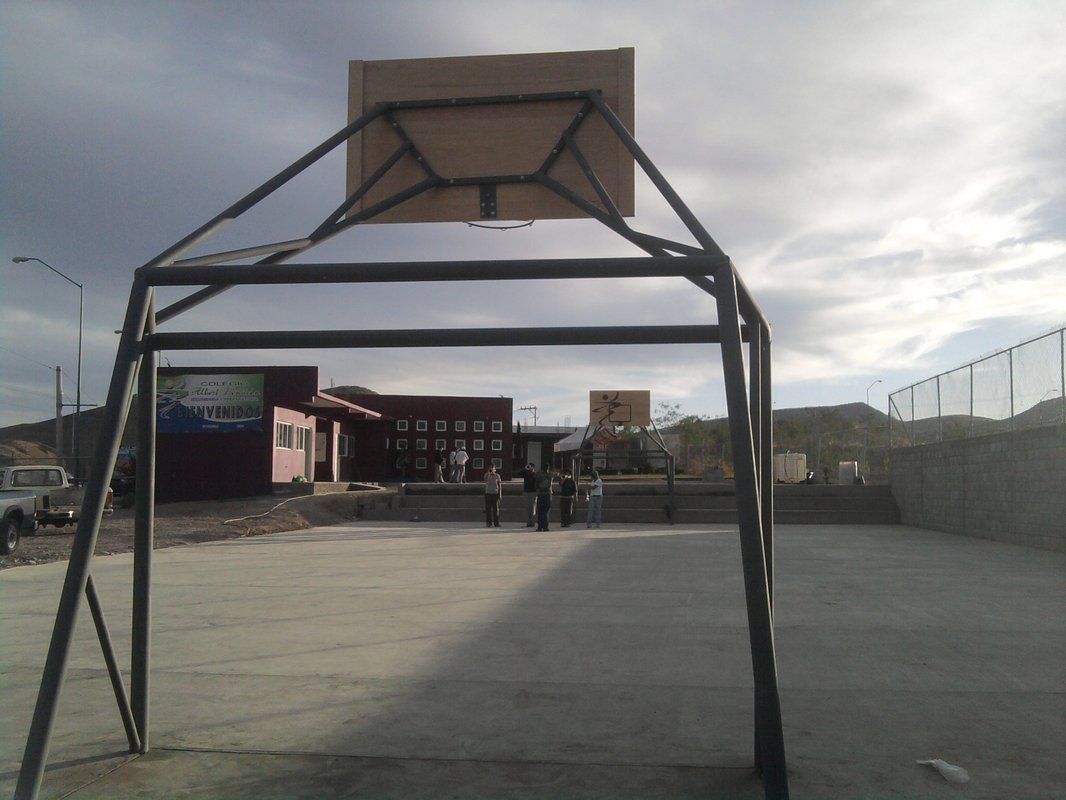
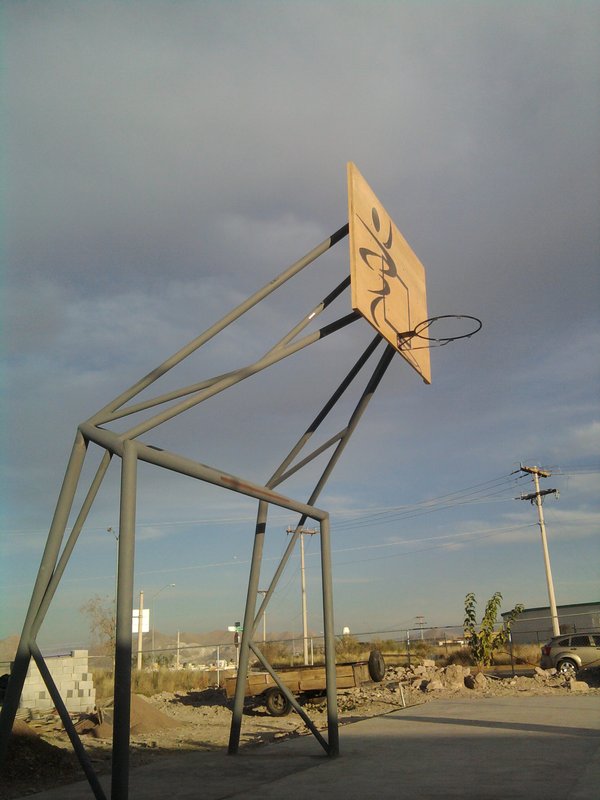
This project originated from a direct request by relatives opening a high school. As I finished my industrial design degree, they needed a multipurpose outdoor sports structure for their new facilities. I designed, managed fabrication, and oversaw installation of a dual-function soccer goal with integrated basketball hoop.
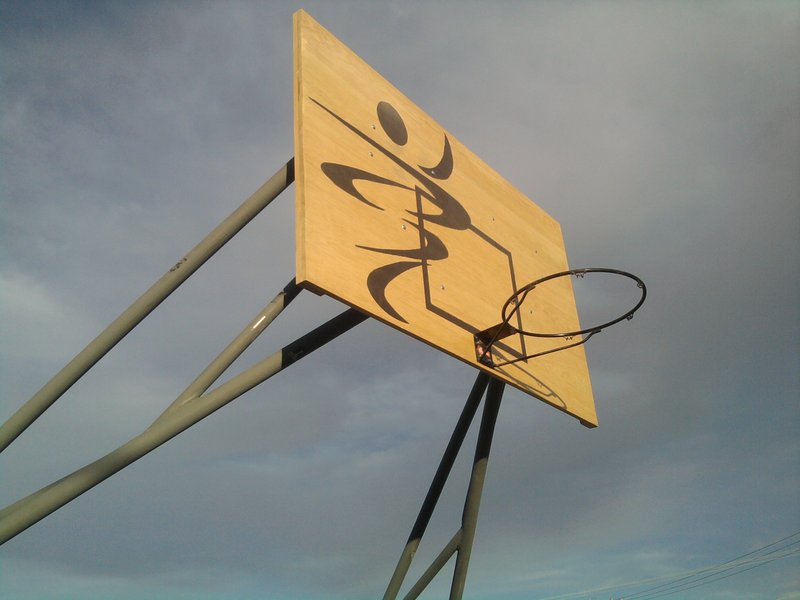
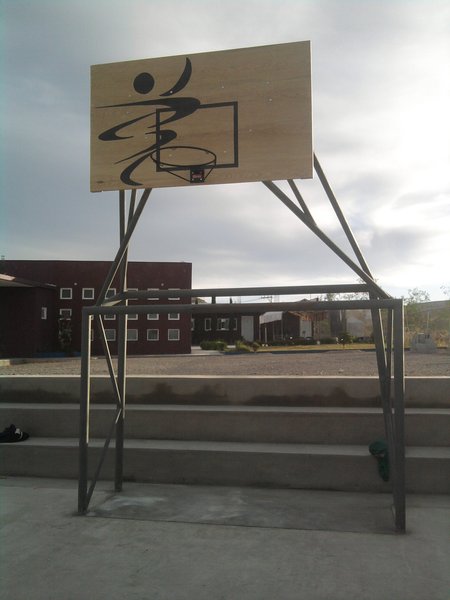
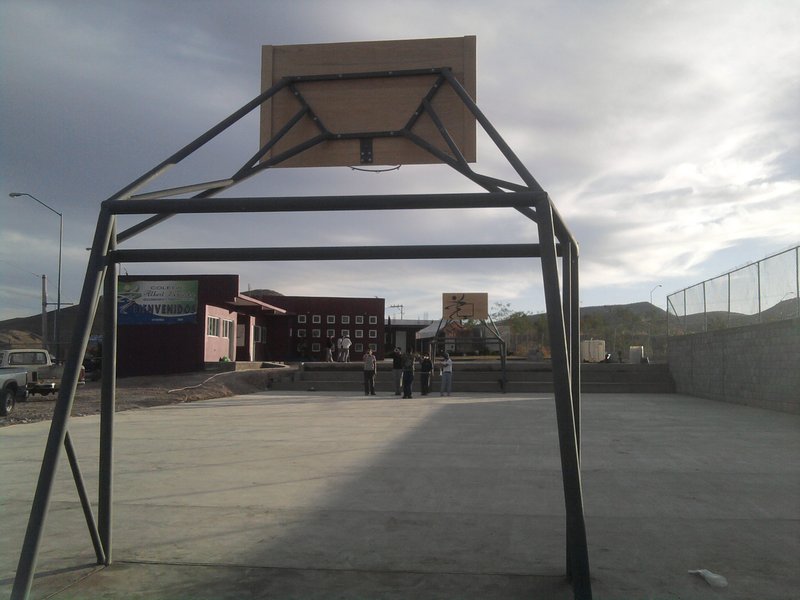
Research
I'm very familiar with these combo structures from childhood, i used to climb them all the way to the top; They're very common in México, found mostly in schools and public parks all around the city, they're simple, robust, and often built ad-hoc by welders or civil engineers.
Key specs drawn from standards:
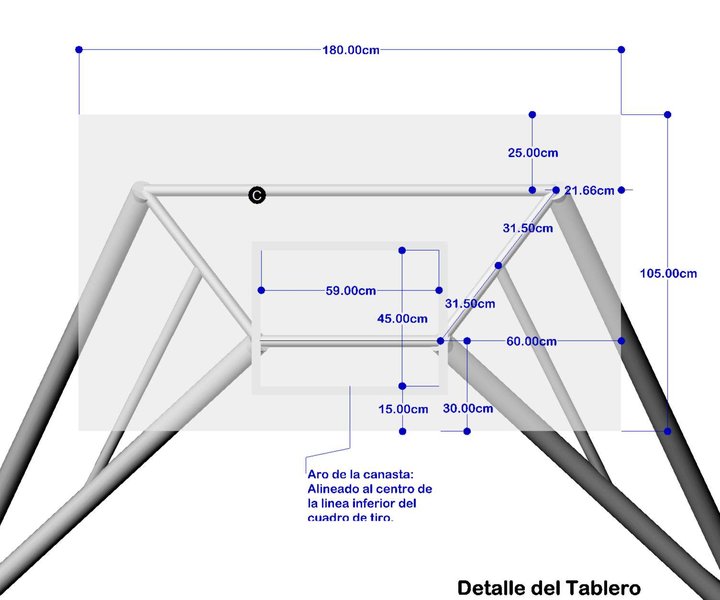
- Basketball: Regulation height 3.05 m, backboard 1.83 m × 1.07 m (72" × 42").
- Soccer: Full-size (2.44 m × 7.32 m) impossible to integrate → I chose "rapid"/small-sided youth size (commonly ~1.8–2.1 m high × 5.5–6.4 m wide for U9–U12).
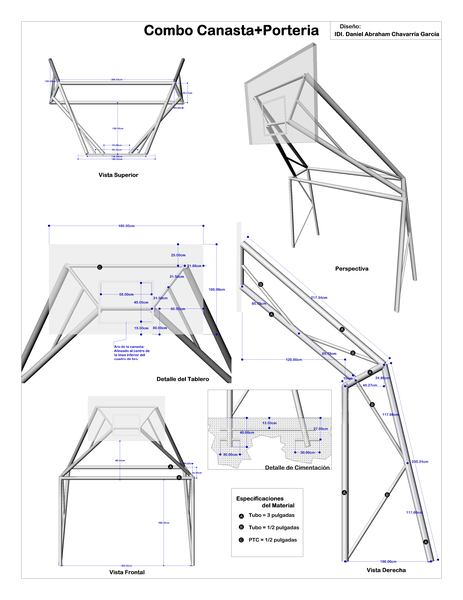
- Goalpost tubes: Standard 4-5 in diameter downsized to 3 in for practicality.
- Complementary: ½ in tubular steel + ½ in plate for backboard base. Basket closely followed international specs.
Design
My Goal was to differentiate from typical boxy designs without raising costs.
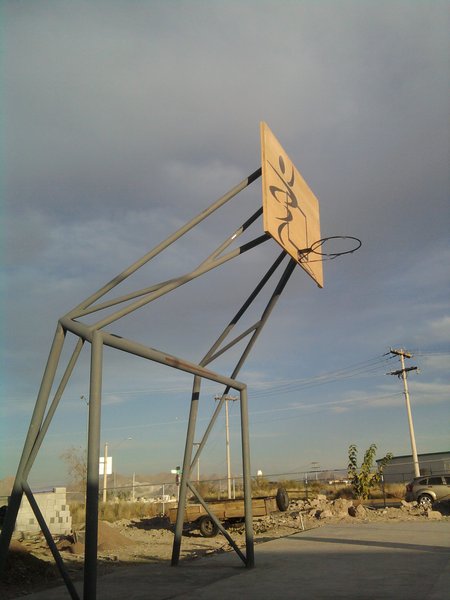
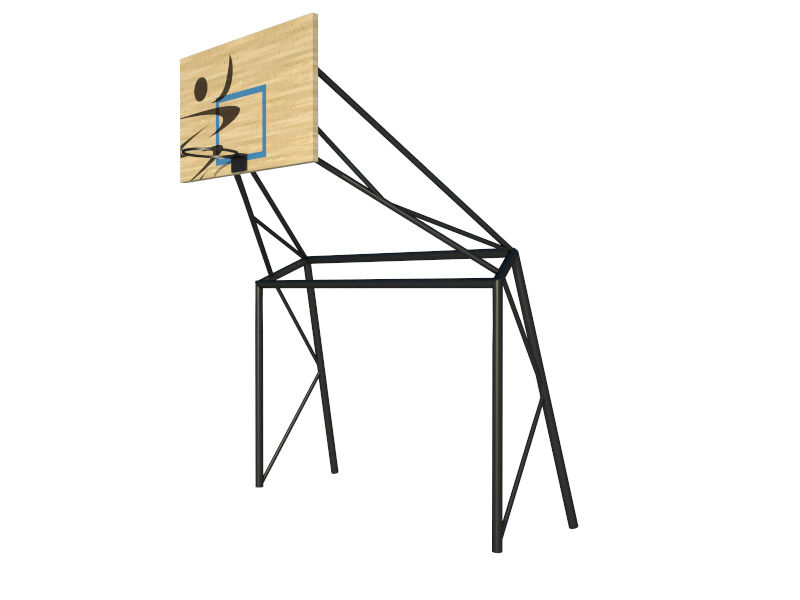
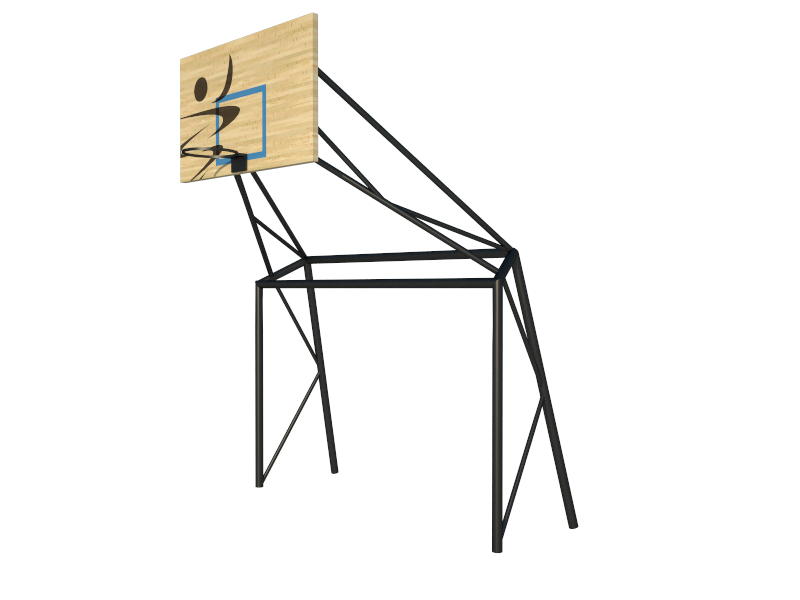
- Angled secondary structural posts break square aesthetic, add visual interest.
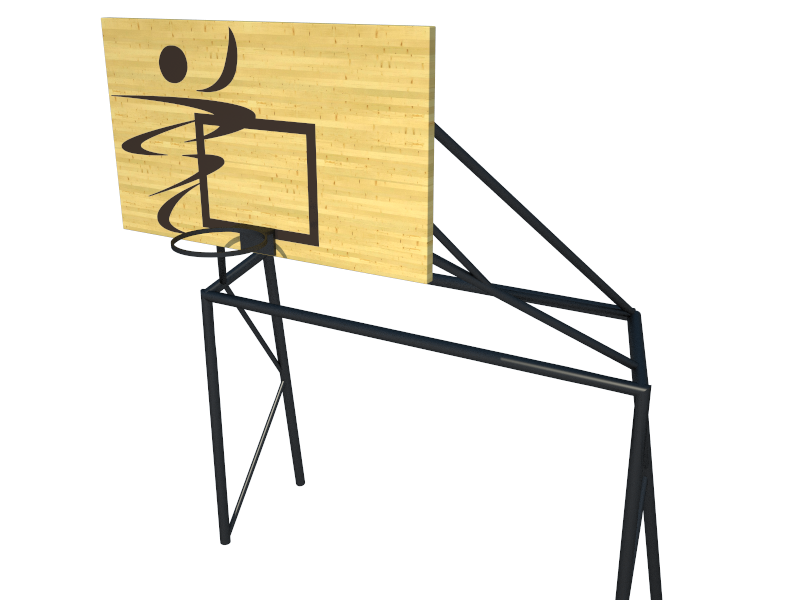
- Critical: Relocated support tube from goal frame corner to basketball hoop base by ~15 cm. Prevents ball deflection ambiguity at joint—allows clear visual judgment of valid goals (balls hitting node often redirect unfairly).
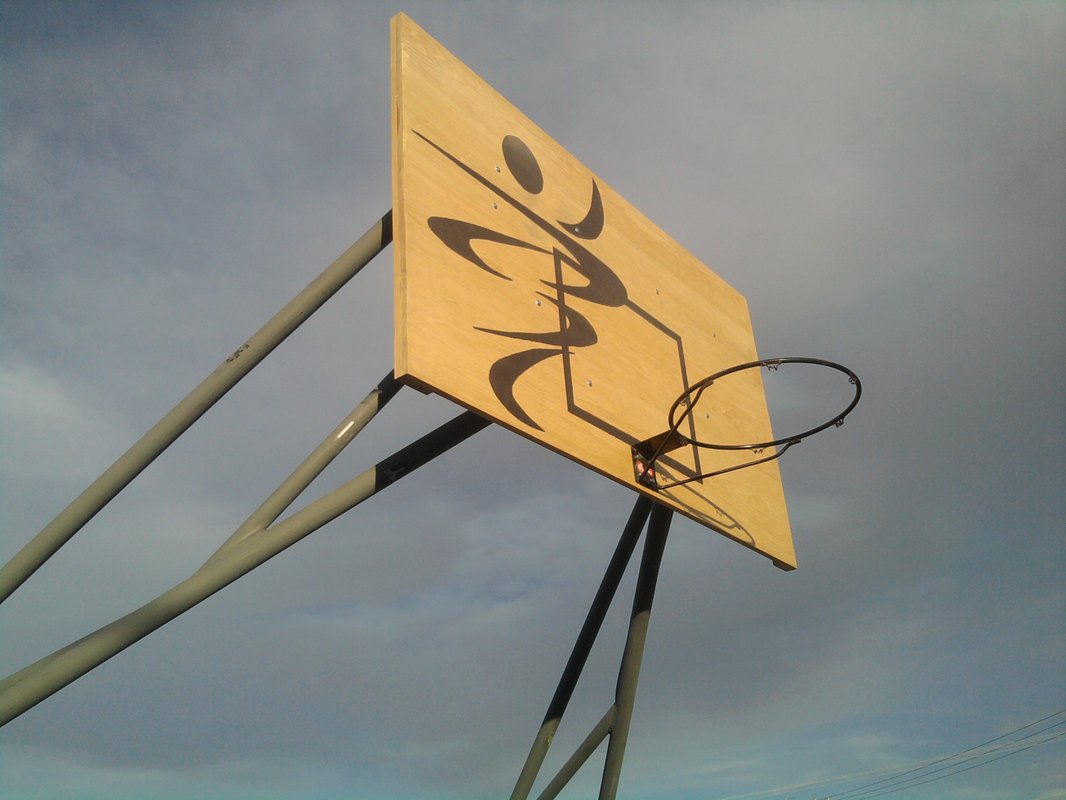
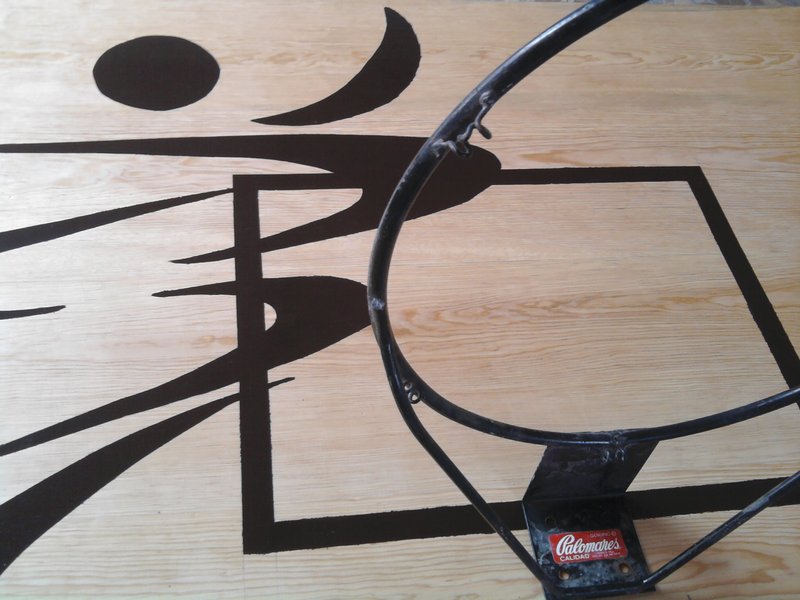
- Backboard: Solid wood panel (premium natural contrast to metal), attached via countersunk through-holes to avoid ball redirection. Monochrome logo + target square painted before polyurethane varnish.
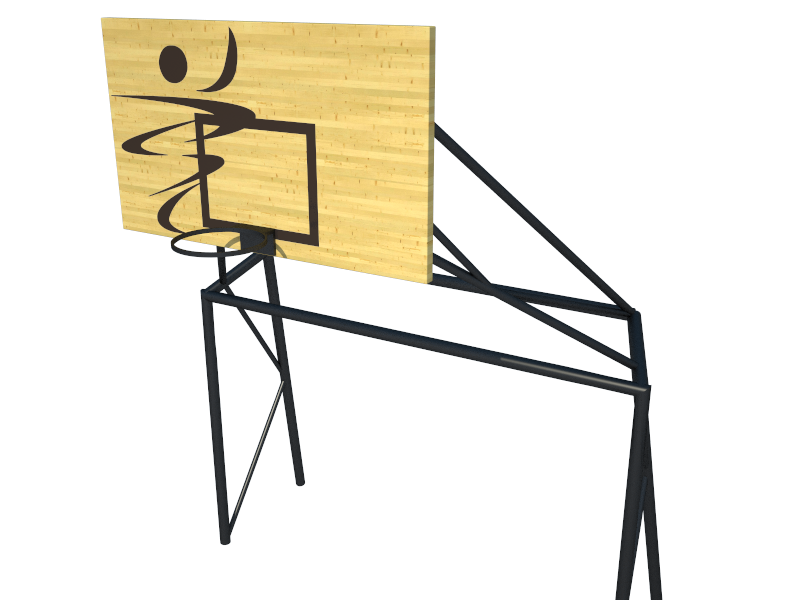
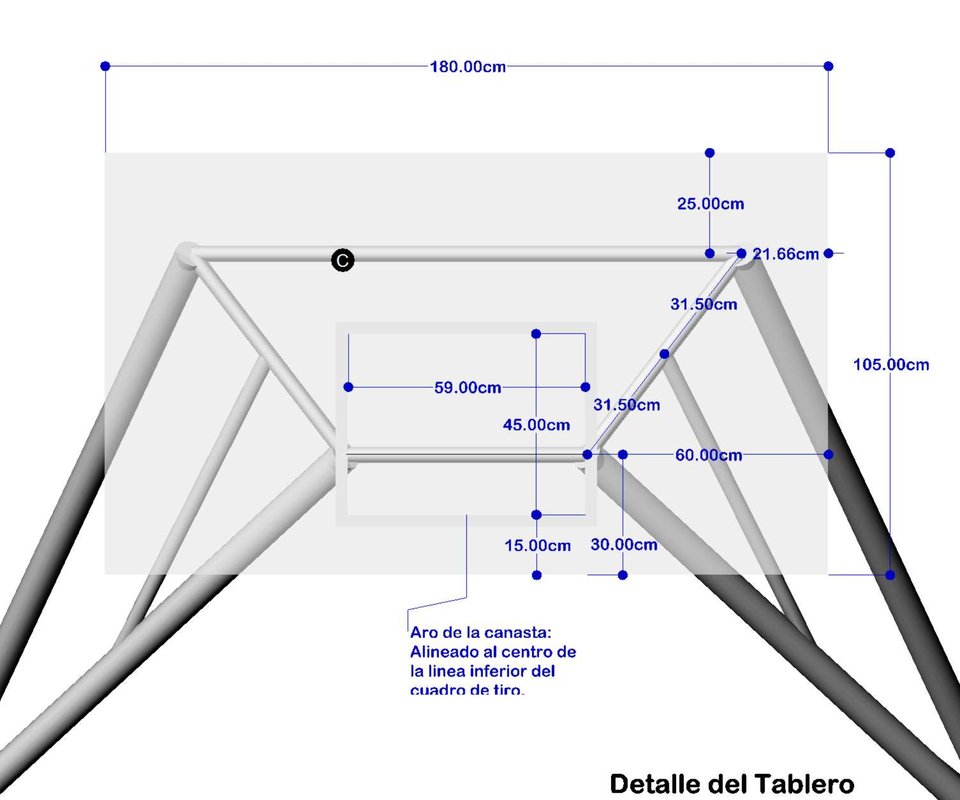
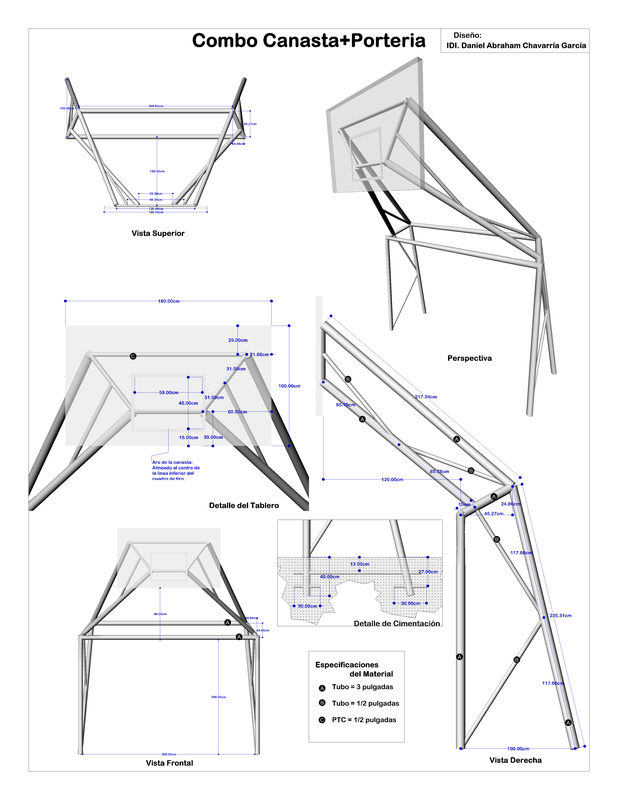
Manufacturing
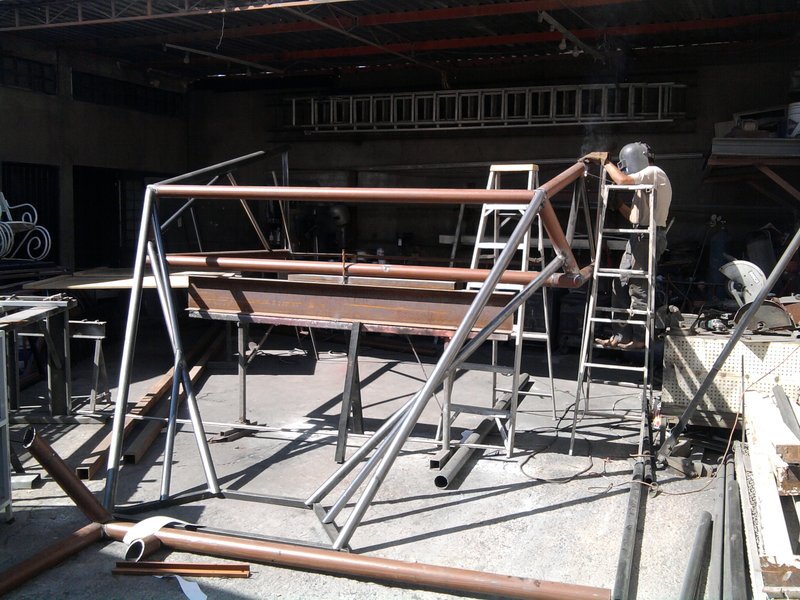
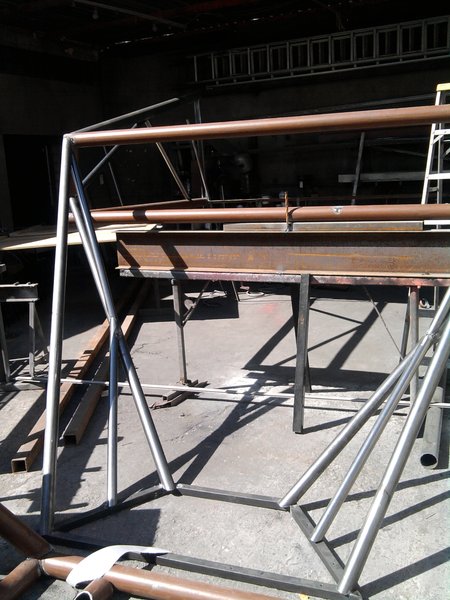
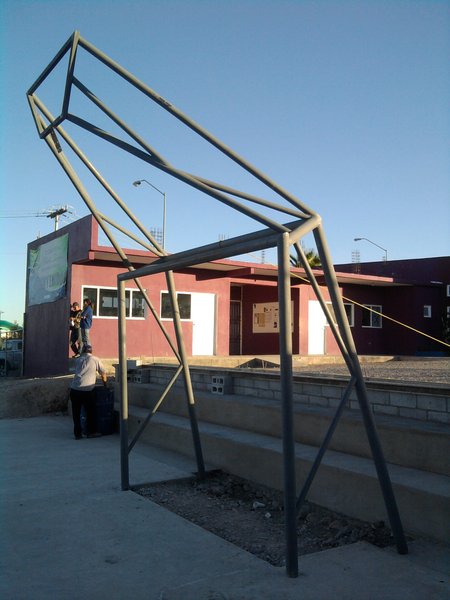
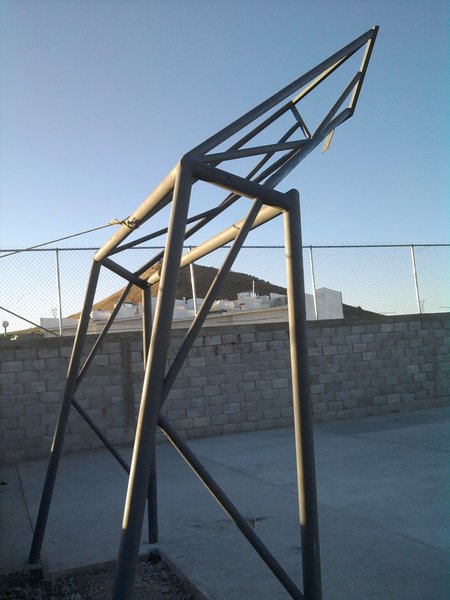
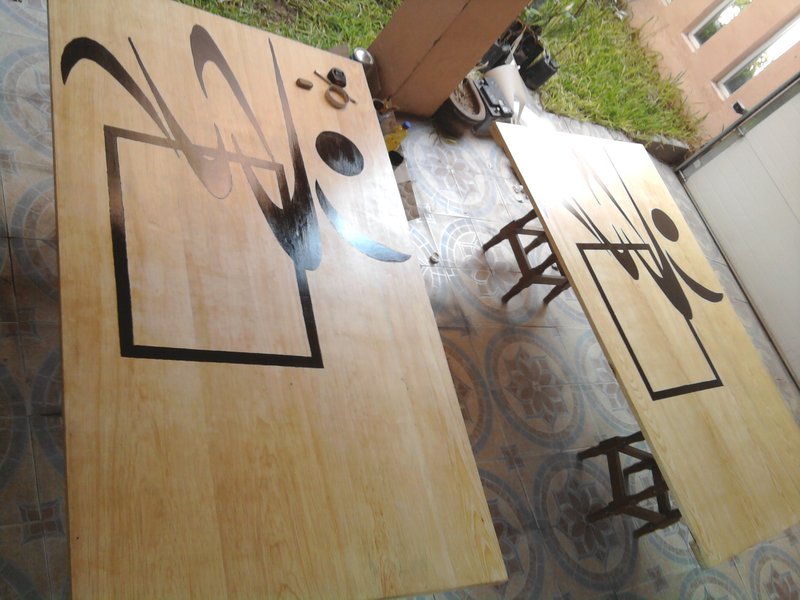
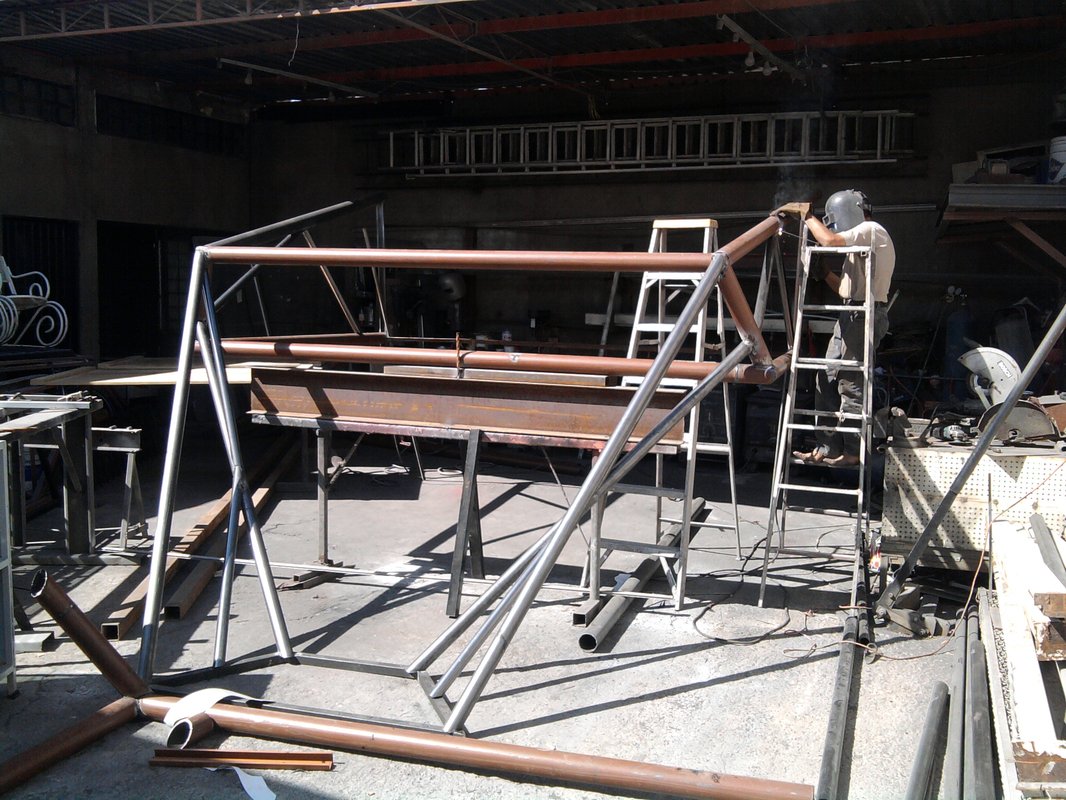
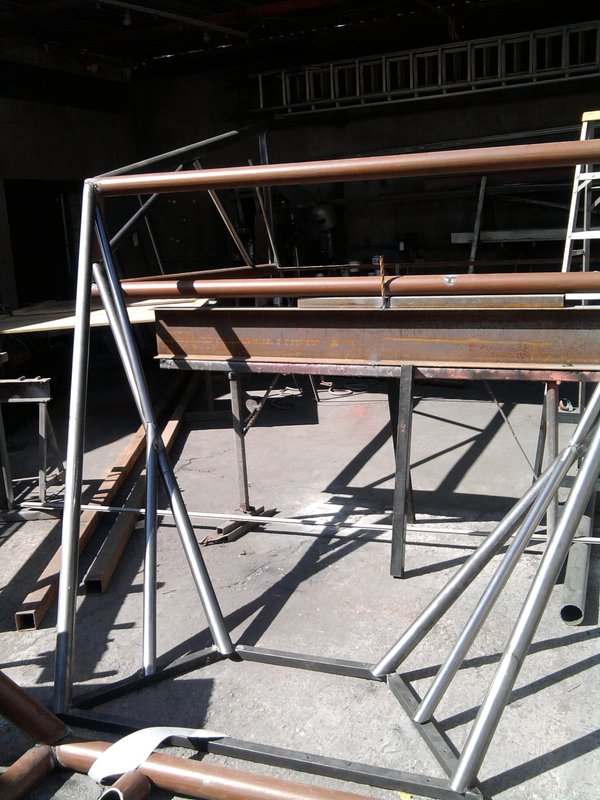
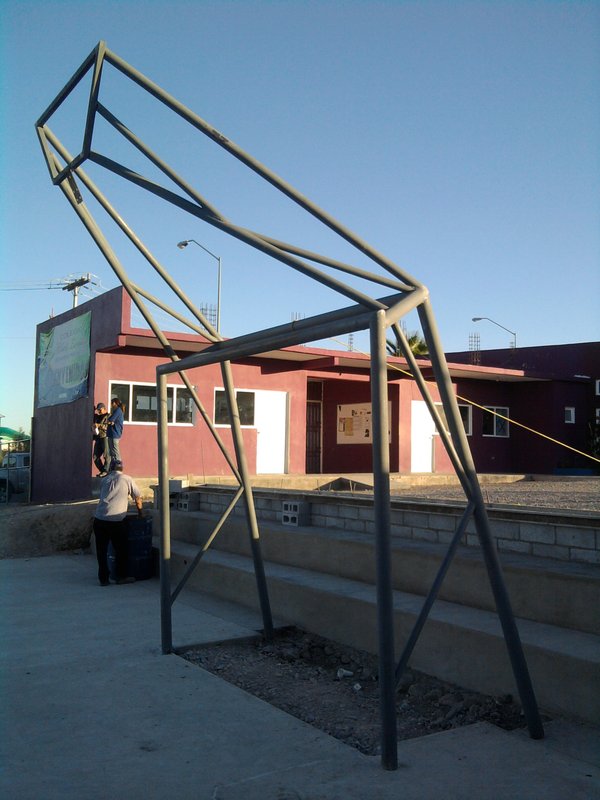
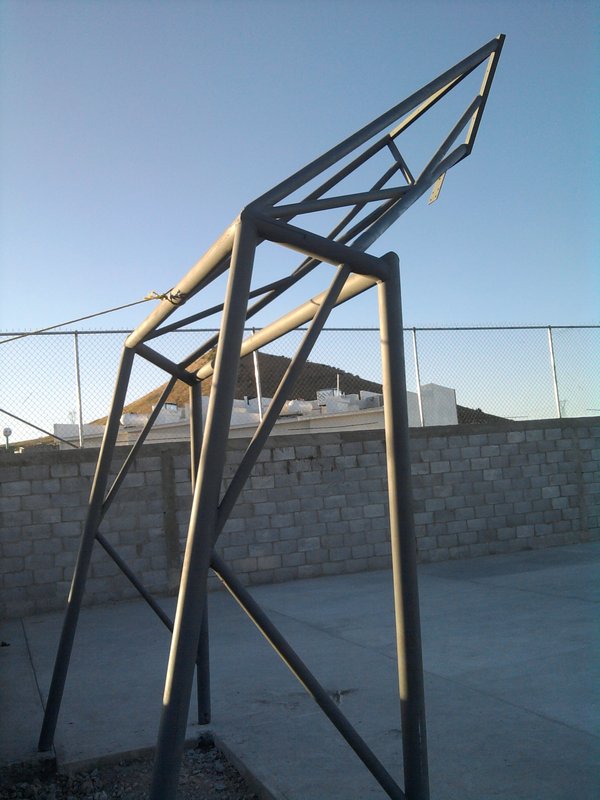
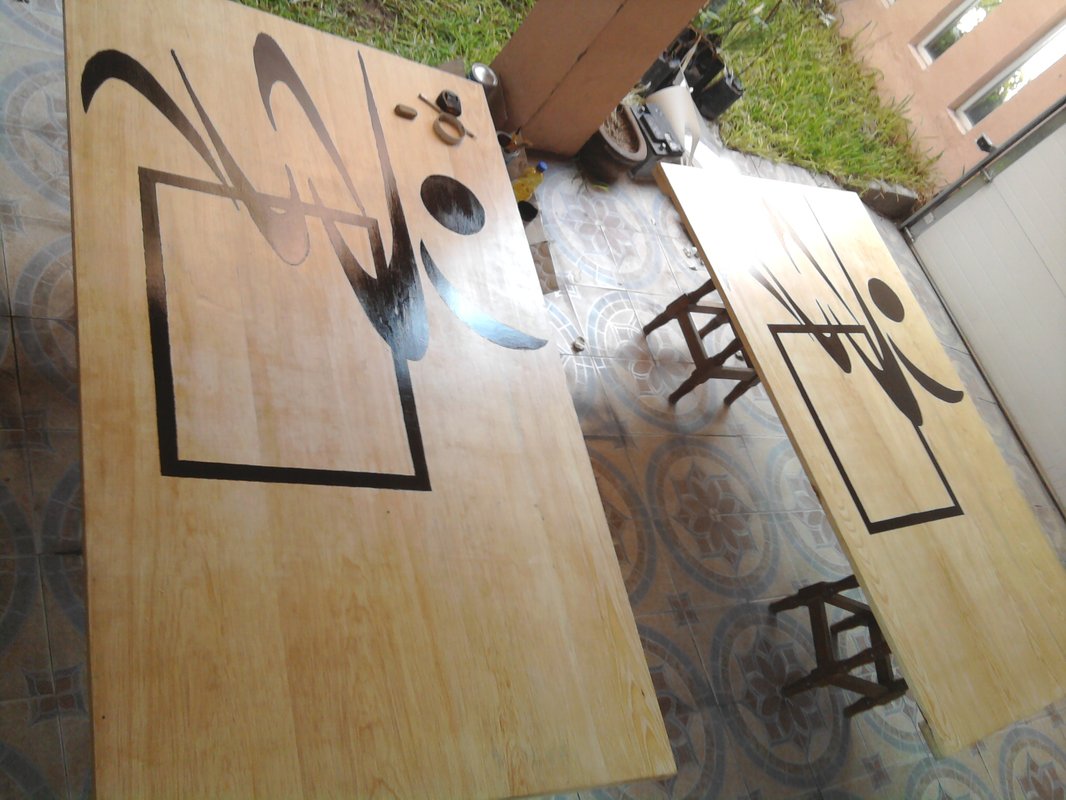
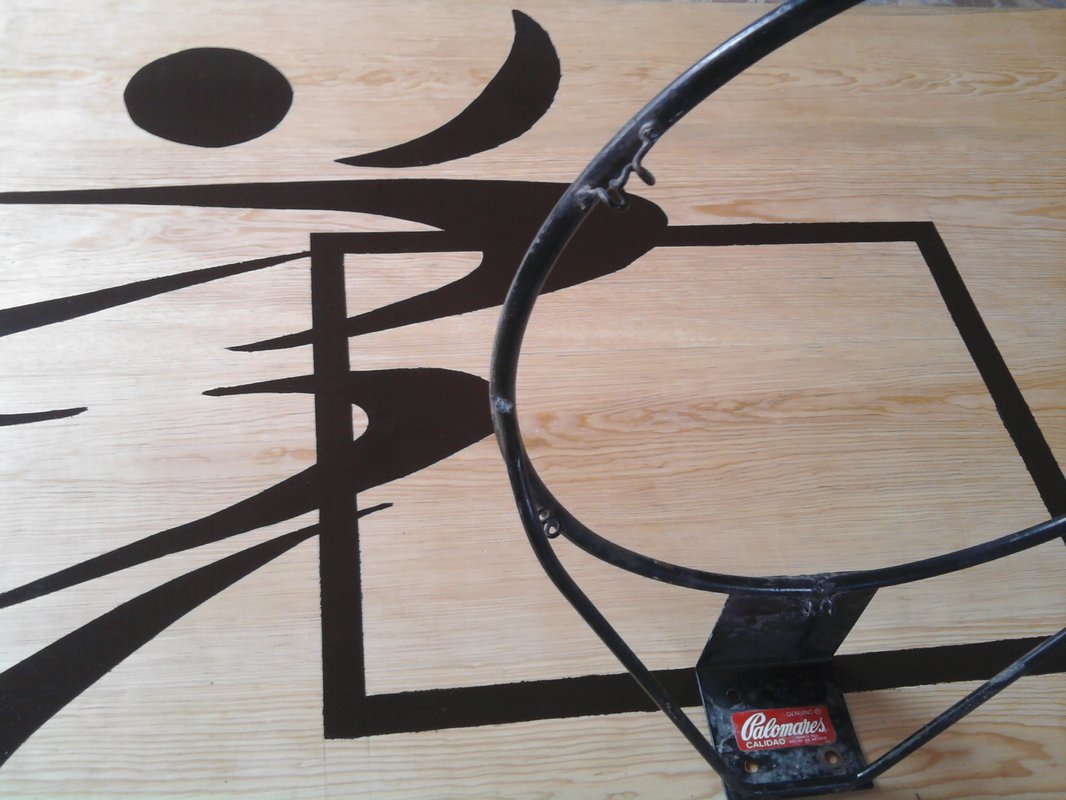
School's existing metal shop (known for guardrails) handled fabrication.
Close collaboration: provided detailed plans, resolved issues on-site.
Challenges: Precise alignment of angled planes. Built 120 cm jig to hold goal frame level while base sat flat. Each joint templated in paper for accurate miter cuts—first unit guided second. Everything duplicated symmetrically.
Opportunities for Optimization
- Wood backboard: Multi-plank construction risks splitting from weathering. Add rear support frame.
- Wood movement: Base attachment slots needed for expansion/contraction.
- Base shape: Inverted trapezoid → simpler rectangular better for stability/manufacturing.